





Manual Tile Cutters
Tile Cutters for Accurate and Clean Cuts
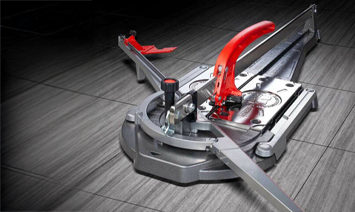
In the tile-cutting process, a hardened scoring wheel is used to score the glazed surface of a tile, and controlled pressure is applied along the scored line to break the tile. The result is a straight, chip-free edge without the dust or setup time a wet saw demands.
Contractors use tile cutters for almost every job that requires ceramic, porcelain, or natural stone tile. Whether you're cutting a single row of subway tile for a backsplash or breaking down 24x48 porcelain slabs for a commercial floor, the right tile-cutting tool will make the process accurate in seconds.
Types of Tile Cutters Explained
There are two basic types of manual tile cutters: push and pull cutters. Push cutters set the scoring wheel on a stationary rail and then push the cutting head away from you to provide a stable, guided cut, especially useful for smaller-format tile. Pull cutters move the wheel toward the body, which is easier for many installers to use on longer cuts.
Large-format cutters have a cutting rail that's much longer than 24 inches, with some extending beyond 60 inches, allowing you to score and snap large-format porcelain and gres in one pass rather than piecing them together. A slide tile cutter is also in this category, where the scoring head is moved along a fixed path so that the pressure applied to the tile is consistent throughout the entire length of the scoring head.
In addition to the cutter, nippers and nibblers are used to cut around outlets, pipes, and curves that a straight-line cutter cannot reach. For thicker material and deep miters, and cuts that a manual tool just can't make, ceramic cutting machines use a diamond blade with water cooling.
Key Features and Benefits of a Tile Cutting Tool
The depth and cleanliness of your score line depend on the wheel diameter and hardness. If you're cutting several hundred tiles per week, a titanium-coated wheel will last much longer than a standard steel wheel. Rail length sets your maximum tile size, so measure your largest format before you buy the tool.
Look for a solid, adjustable-width fence for repeated cuts, ball-bearing wheel carriages for even, smooth pressure, and a breaking mechanism that snaps the tile with one action rather than finishing it by hand.
How to Choose the Right Tile Cutter
If you work mainly with 12x24 ceramic and porcelain, a 24- to 30-inch push or pull cutter is just good. When large format slabs are a regular part of your work, go for a 40" or larger cutter, as it will require less work around and loss of material.
Manual cutters are not necessarily better than electric ceramic cutting machines, and vice versa. A manual cutter is quicker to set up, doesn't require a power source, and generates no dust, making it the right choice for most straight cuts on the jobsite. The electric wet saw is the machine to use when you require mitered edges, cuts on natural stone, or precision on material thicker than a manual wheel can score cleanly.
Maintenance and Usage Tips
To prevent grout dust and tile fragments from accumulating in the track, wipe down the rail and wheel after every use, as this is the most common cause of a crooked cut. Before beginning a new job, inspect the scoring wheel for flatness or chips. Replace the wheel immediately if the score line is not running smoothly and continuously.
Score in one stroke and do not score twice over the same line. Do not use sudden force on the braking lever, but a steady, even pressure. Do not put fingers in the braking mechanism; wear safety glasses when nipping or nibbling tile. Place the cutter on a flat, stable surface before beginning to score.
Extra support is required for large tiles on either side of the cutting rail. If ignored, the unsupported end may bend and break in the wrong place, destroying an expensive piece of porcelain in a two-second setup step you missed.
Shop Tile Cutters at Tool Academy
Tool Academy offers a wide range of tiling tools from big names like Sigma, Montolit, Raimondi, Rubi, Battipav, and QEP. Since 1989, our experienced team has assisted contractors in matching the correct cutter to the tile, and that product knowledge is reflected in every order we ship.
